 Weather IntelligenceMonitoring System
- Weather Systems
- Automatic Weather StationComplete sensor-to-cloud AWS Industrial Weather StationRugged monitoring for plants Solar Weather StationGHI, POA and module temperature Environmental Monitoring SystemWeather, air, gas, noise and water Automatic Rain GaugeTipping-bucket rainfall telemetry Rainfall Monitoring SystemWatershed, city and dam networks Weather Data LoggerAnalog, pulse, Modbus and MQTT IoT Weather MonitoringSecure multi-site cloud dashboard Weather Station SCADALive trends, alarms and reports
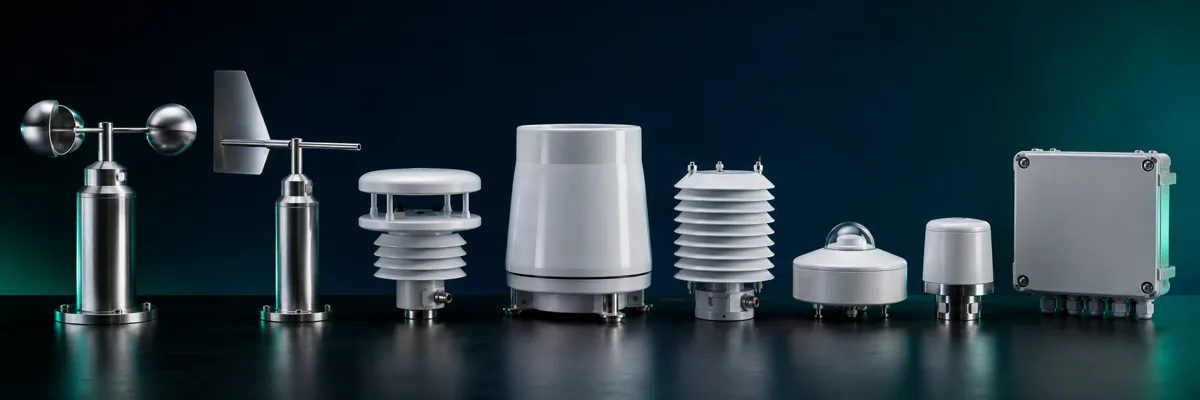 Industrial Sensor SuiteWind • Rainfall • Temperature • Humidity • Irradiance
- Request Quote
industrial weather station
Industrial Weather Station for Factories, Utilities & Remote Plants
Industrial weather station — A rugged, integration-ready weather monitoring system for manufacturing plants, process industries, utilities, warehouses, mines and infrastructure sites. Swarup Softech combines field sensors, industrial data acquisition, PLC/SCADA connectivity, alarms, SQL logging and management reports in one maintainable architecture.
System capabilities
Industrial Weather Station engineered for reliable operation
A rugged, integration-ready weather monitoring system for manufacturing plants, process industries, utilities, warehouses, mines and infrastructure sites. Swarup Softech combines field sensors, industrial data acquisition, PLC/SCADA connectivity, alarms, SQL logging and management reports in one maintainable architecture.
Plant Weather Monitoring
Continuous site conditions for operations, EHS and utilities teams.
Rugged Field Sensing
Industrial enclosures, mast arrangements and surge-protection options.
PLC Integration
Weather values mapped directly into the existing automation platform.
SCADA Dashboard
Live values, status, alarms, trends and engineering diagnostics.
Database Reporting
Time-stamped SQL records, CSV exports and scheduled reports.
Remote Connectivity
Ethernet, 4G, VPN and cloud options for distributed facilities.
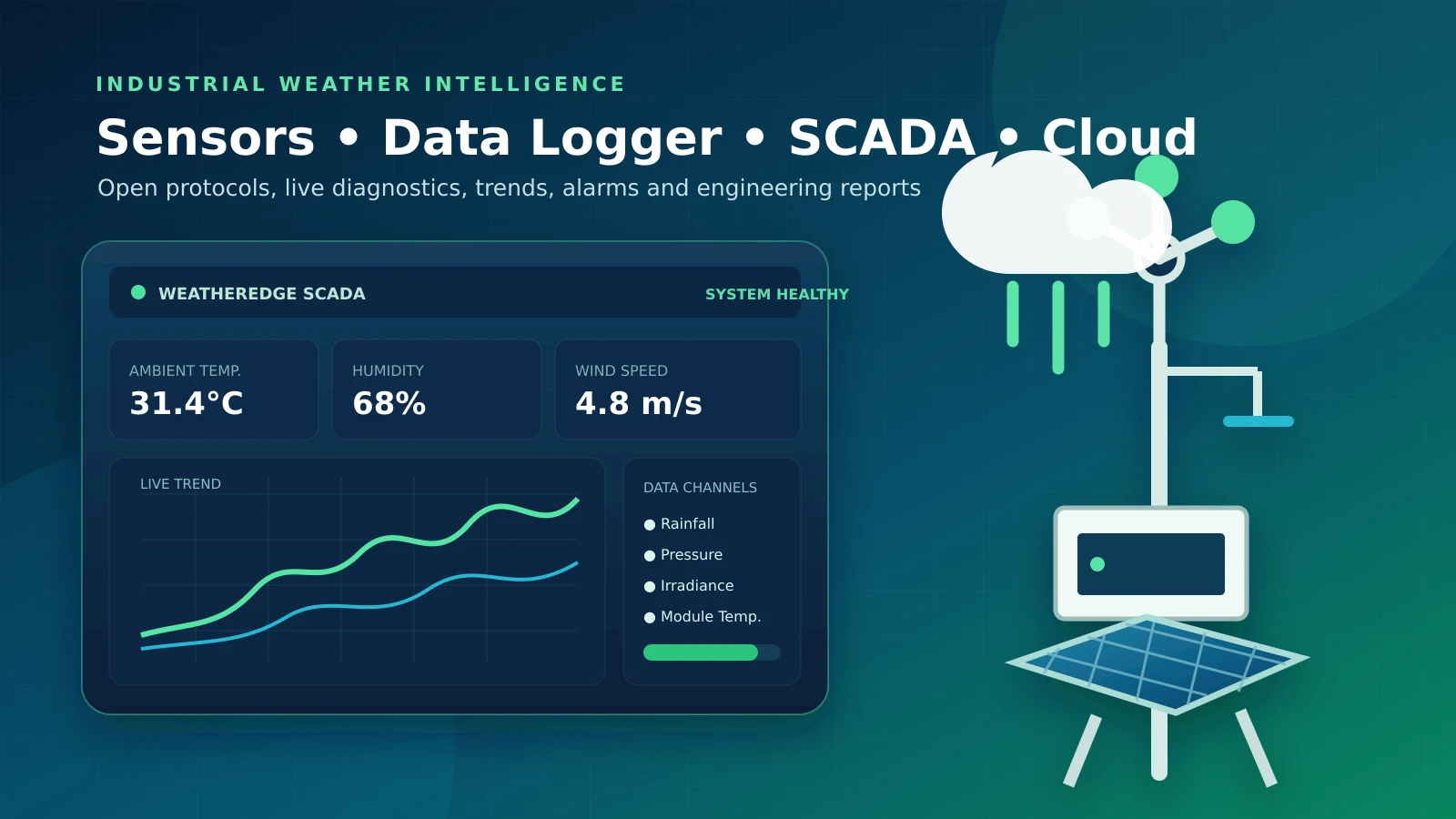
industrial weather station architecture
Industrial Weather Station sensor-to-cloud system
The industrial weather station combines field sensors, industrial data acquisition, local storage, open communication, SCADA visualization, alarms and engineering reports. Hardware and software are configured for the approved site requirement.
Discuss Your ApplicationParameters and signals
Configurable measurement and diagnostic data
Final range, accuracy, resolution, interface and mounting are selected against the approved project specification.
Open architecture
Field sensor to decision-ready data
A maintainable architecture connecting instruments with industrial and enterprise systems.
Engineering approach
Weather data that becomes part of plant operation
A standalone display is not enough when weather conditions affect material handling, cooling, ventilation, safety, emissions, logistics or maintenance. The system can exchange data with Schneider, Siemens, Rockwell and other PLC/SCADA environments.
Alarm thresholds, equipment health, communication diagnostics and historical records help plant teams act on data instead of only viewing it.
Applications
Designed around real operating requirements
Hardware, communication, software and reports are tailored to the site and data users.
Manufacturing Plants
Site conditions linked with production and EHS dashboards.
Chemical & Process
Weather inputs for safety and environmental operations.
Mining & Material Handling
Wind, rain and visibility information for exposed operations.
Warehousing & Logistics
Weather alerts supporting dispatch and yard planning.
Utilities & Power
Remote station monitoring and central control-room integration.
Infrastructure Sites
Distributed monitoring with secure telemetry and reports.
Frequently asked questions
Industrial Weather Station FAQ
Can the station connect to an existing SCADA?
Yes. Values and status can be integrated using Modbus, OPC UA, MQTT, SQL or a project-specific interface.
Is local storage available during network failure?
Yes. Data can be buffered locally and synchronized when communication returns.
Can alarm limits be customized?
Yes. Limits, delays, hysteresis and escalation logic can be engineered for the application.
What enclosure options are available?
Outdoor industrial panels, mast-mounted junction boxes and site-specific protection can be selected.
Can multiple plants be monitored centrally?
Yes. Multiple stations can report to a central SCADA or cloud dashboard with site-wise access.
industrial weather station design, installation and commissioning guide
A reliable industrial weather station is more than a collection of instruments. Measurement quality depends on site exposure, sensor selection, mechanical installation, power protection, communication design, software configuration and disciplined commissioning. The following views and checklist help project owners compare proposals on engineering value, not only on hardware price.
Plant Weather Monitoring
Continuous site conditions for operations, EHS and utilities teams. During design, confirm ownership, acceptance criteria, documentation and the service process so this part of the industrial weather station remains measurable and maintainable throughout the project lifecycle.
Rugged Field Sensing
Industrial enclosures, mast arrangements and surge-protection options. During design, confirm ownership, acceptance criteria, documentation and the service process so this part of the industrial weather station remains measurable and maintainable throughout the project lifecycle.
PLC Integration
Weather values mapped directly into the existing automation platform. During design, confirm ownership, acceptance criteria, documentation and the service process so this part of the industrial weather station remains measurable and maintainable throughout the project lifecycle.
SCADA Dashboard
Live values, status, alarms, trends and engineering diagnostics. During design, confirm ownership, acceptance criteria, documentation and the service process so this part of the industrial weather station remains measurable and maintainable throughout the project lifecycle.
Site survey and exposure
Begin with a documented site survey covering sensor exposure, mounting height, surrounding obstructions, cable routes, earthing points and service access. Confirm where the measurement must represent the process area and where local heat, structures, vibration or reflected radiation could distort readings. A clear survey prevents expensive relocation and gives the installation team an approved reference layout.
Sensor selection and accuracy
Select sensor ranges, stated accuracy, response time and environmental protection from the real operating conditions instead of choosing only by catalogue price. Review calibration certificates, long-term drift, replaceable elements and traceability. The right combination balances measurement quality, maintenance effort and lifecycle cost while keeping every channel useful for engineering decisions.
Mounting and mechanical work
Use rigid masts, correct booms, UV-resistant accessories and stainless or protected hardware suited to the site. Keep wind, radiation, rain and temperature sensing clear of turbulence and artificial heat sources. Mechanical drawings should identify orientation, elevation, foundation, enclosure and safe access so contractors can install consistently and technicians can service equipment without disturbing alignment.
Power and surge protection
Define normal power, solar backup, battery autonomy and low-voltage isolation before panel fabrication. Outdoor measurement systems also need coordinated earthing, shield termination, surge protection and lightning-risk planning. Verify the power budget for sensors, logger, modem and heaters under worst-case conditions, then document fuses and isolation points for faster fault finding.
Communication architecture
Agree the required interface with PLC, SCADA, cloud or database teams early. Record Modbus maps, baud rate, Ethernet addressing, MQTT topics, API fields, timestamps and units in an interface document. Local buffering and store-and-forward logic should protect data during network outages, while VPN, user permissions and encrypted transport reduce cyber and operational risk.
Data quality and validation
Commission every channel with a reference check and confirm engineering units, scaling, timestamps, sample rate and averaging logic. Configure range checks, rate-of-change limits, sensor health flags and communication alarms. Trend comparison helps identify wiring errors, poor siting and drift before the system is accepted, and creates a clean baseline for future maintenance.
Dashboard and reporting
Design dashboards around the people who will use them: operators need live status and alarms, engineers need trends and diagnostics, while management needs concise availability and exception reports. Standard naming, clear units, sensible colours and exportable records make the data actionable. Report templates should match shift, daily, monthly and regulatory workflows.
Maintenance and support plan
Create a preventive maintenance plan covering visual inspection, cleaning, calibration intervals, battery health, enclosure seals, cable condition, firmware backups and spare parts. Assign responsibilities and keep service records with serial numbers and certificates. Remote diagnostics can shorten outages, but safe local access, clear drawings and trained personnel remain essential for dependable operation.
Acceptance, lifecycle value and handover
Before final acceptance, review as-built drawings, channel lists, communication maps, calibration certificates, configuration backups, alarm logic, dashboard access and operator training. Record a witnessed comparison for critical measurements and test power failure, network interruption, local storage and recovery. A complete handover package reduces dependence on individual installers and gives future service teams the information required to restore operation quickly.
The commercial evaluation should include expected calibration, consumables, communication charges, software support, spare parts and travel—not only initial supply cost. When these lifecycle items are defined, the industrial weather station becomes a dependable data asset for operations, compliance, research and performance analysis. Swarup Softech can support survey, engineering, panel integration, software, commissioning and annual maintenance as one coordinated scope.
During proposal comparison, ask every bidder to state exclusions, calibration validity, enclosure rating, cable allowance, installation responsibility, protocol support, data ownership, warranty response and recurring licence cost in writing. The same checklist should be used for factory acceptance and site acceptance so performance can be verified against measurable commitments. Documenting these details protects the schedule, avoids interface disputes and helps the operations team budget for reliable service after the warranty period. For remote or critical locations, include recommended spares, escalation contacts, remote-access procedure and a practical recovery plan.
industrial weather station project summary
- industrial weather station scope: confirm parameters, ranges, mounting, power, communication and deliverables.
- industrial weather station data: agree units, timestamps, storage, alarms, reports and ownership.
- industrial weather station acceptance: witness channel checks, network recovery, dashboards and documentation.
- industrial weather station support: define calibration, spares, remote diagnostics and response responsibility.
Discuss your industrial weather station requirement
Share the parameter list, site conditions, communication preference and reporting requirement. Swarup Softech will prepare a suitable technical architecture and commercial proposal.